
Form & Technique
How to Do More Pushups: Form & Progressions
Discover how to do more pushups with proper form, stepwise progressions, and variations for every fitness level.


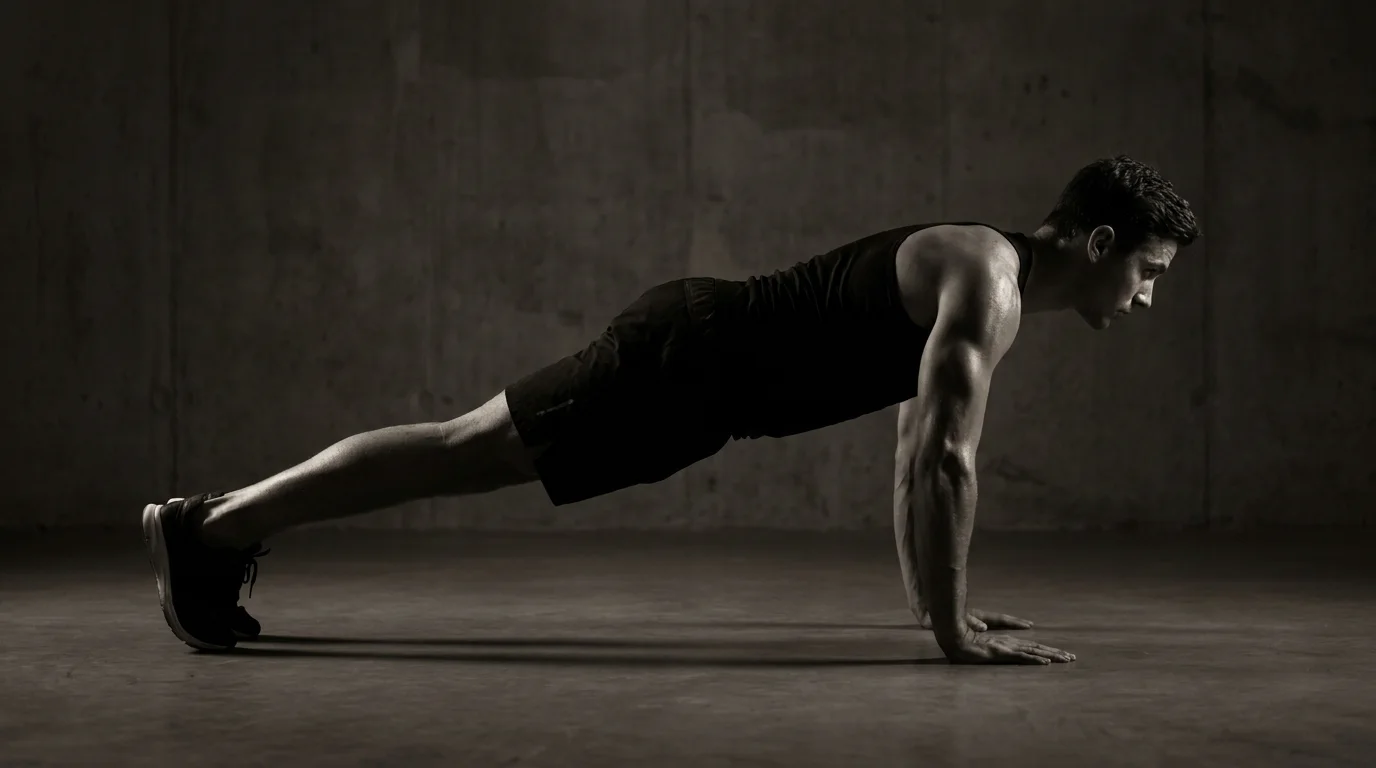
Mastering Push-Up Form: Technique, Tempo, and Mobility
Solid push-ups start with alignment, breath, and controlled movement. Aim for a straight line from head to heels, with core and glutes engaged and ribs knit in.
Hand position, grip width, and stance
- Hands slightly wider than shoulder width, fingers spread, wrists under the shoulders.
- Elbows ~45 degrees to the body as you lower.
- Feet hip-width apart, toes tucked, legs active to keep hips level.
Tempo and breathing cues
- Use a 2-0-2 tempo: 2 seconds down, 0 second pause at the bottom, 2 seconds up.
- Inhale as you descend, exhale as you press up.
- Maintain a stable torso; avoid letting hips sag or rise.
Shoulder health, scapular control, and mobility prerequisites
- Keep the shoulder blades stable—pinch them lightly down and back, then allow slight protraction as you rise.
- Prioritize thoracic mobility to lift the chest and maintain spine neutrality.
- If mobility is tight, include brief thoracic extensions and scapular warm-ups before sets.
Structured 4-6 Week Progression Plan: Build Reps Safely Across Levels
Overview of the progression principles
If you’re wondering how to do more pushups, this plan uses progressive overload with steady weekly volume targets. Start with solid beginner push-ups, then add reps or a set while preserving form. Time under tension and pauses help quality reps stack. Use reps to failure only on the last set if form stays solid. These are the best push-up progressions for beginners—incline and knee variations build a safe foundation.
Week-by-week templates by level (beginner, intermediate, advanced)
- Beginner: 3x5-6; Weeks 3-4: 4x6-7; Weeks 5-6: 5x7-8
- Intermediate: Weeks 1-2: 4x6-8; Weeks 3-4: 4x8-10; Weeks 5-6: 5x9-12
- Advanced: Weeks 1-2: 5x8-10; Weeks 3-4: 5x10-12; Weeks 5-6: 6x11-14
Plateaus, deloads, and progression tweaks
If progress stalls 1-2 weeks, add tempo pushes, pause reps, or one extra set. Consider a light deload week (about 50% volume) before resuming the push.
Metrics for tracking progress (reps, time under tension, form scores)
Track weekly total reps, note time under tension per rep, and rate form on a 1-5 scale after each set.
Variations, Regressions, Tracking, and Longevity: How to Push Further
Variation-by-goal: standard, incline, and unaided progressions
- Standard push-up: hands under shoulders, body in a straight line, core braced. Lower until chest nears the floor; push back up.
- Incline push-up: hands on a bench or step; keep a straight line; lower to the surface, press away.
- Unaided progressions: wall push-ups → knee push-ups on the floor → full push-ups.
Regression and progression options with equipment and tempo
- Regression: wall pushes; knee pushes; higher-elevation incline.
- With equipment: use a light resistance band to assist or add resistance; progress to banded push-ups; or add feet-elevated work for more challenge.
- Tempo: slow the descent to 3–4 seconds; pause 1 second; rise in 2 seconds.
Progress tracking and plateau strategies
- Progress tracking methods: reps, sets, tempo, and date; note effort.
- Plateau strategies: switch variation; alter tempo; add a set; shorten rest.
Motivation, habits, and consistency for long-term gains
- Build the habit: schedule two sessions weekly, cue it to daily routines, track small wins, and learn how to do more pushups.
Rationale: why push-ups build upper body and core strength
- Push-ups recruit chest, shoulders, and triceps, while the core works to stabilize the spine, yielding integrated upper-body strength.
Frequently asked questions
How can I do more push-ups over time?
Use progressive overload with steady weekly increases in reps or sets while preserving form. Start with beginner variations (incline or knee push-ups) and add reps, extra set, or time under tension; use pauses and tempo to stack quality reps and track progress.
What is the correct push-up form for maximum efficiency and safety?
Keep a straight line from head to heels, with core and glutes engaged and ribs knit in. Hands slightly wider than shoulders, elbows about 45 degrees, wrists under the shoulders, and feet hip-width apart; use a 2-0-2 tempo, inhale down and exhale up, while maintaining stable shoulder blades and thoracic mobility.
How do I progress from knee push-ups to a full standard push-up?
Use a staged path: start with wall or incline variations to reduce load, then move to knee push-ups on the floor, and finally work toward full push-ups with controlled tempo and possible pauses to build control and range of motion.
Are push-ups suitable if I have shoulder or wrist discomfort, and how can I modify?
Yes, with modifications. Start with higher-elevation variants like incline or wall push-ups to unload the shoulders, keep the elbows at ~45 degrees, and add mobility work; progress through regression options (wall → knee → incline) and adjust tempo as needed to stay pain-free.
About the authors

Goran Huskić
Co-founder · Professional basketball player
Goran Huskić is a Serbian professional basketball player — a 6'11" center currently playing for Monbus Obradoiro in Spain's Primera FEB. He won the 2019–20 Basketball Champions League with San Pablo Burgos and has competed professionally across Spain, Germany, Lithuania, Serbia and the United States. He co-founded PUSHapp to bring pro-level training discipline to everyday workouts.

Nikola Janković
Co-founder · Former professional basketball player
Nikola Janković is a former professional basketball player — a 6'9" forward and the 2016–17 ABA League MVP — who played for Partizan, Union Olimpija and Mega, among others. Today he runs a pilates studio and gym focused on strength, mobility and overall wellbeing. He co-founded PUSHapp to make consistent, measurable training simple for everyone.