
How Many & Who
How many pushups can the average person do: age norms
Explore how many pushups the average person can do by age and sex, with percentile norms from FitnessGram and CSEP-PATH.


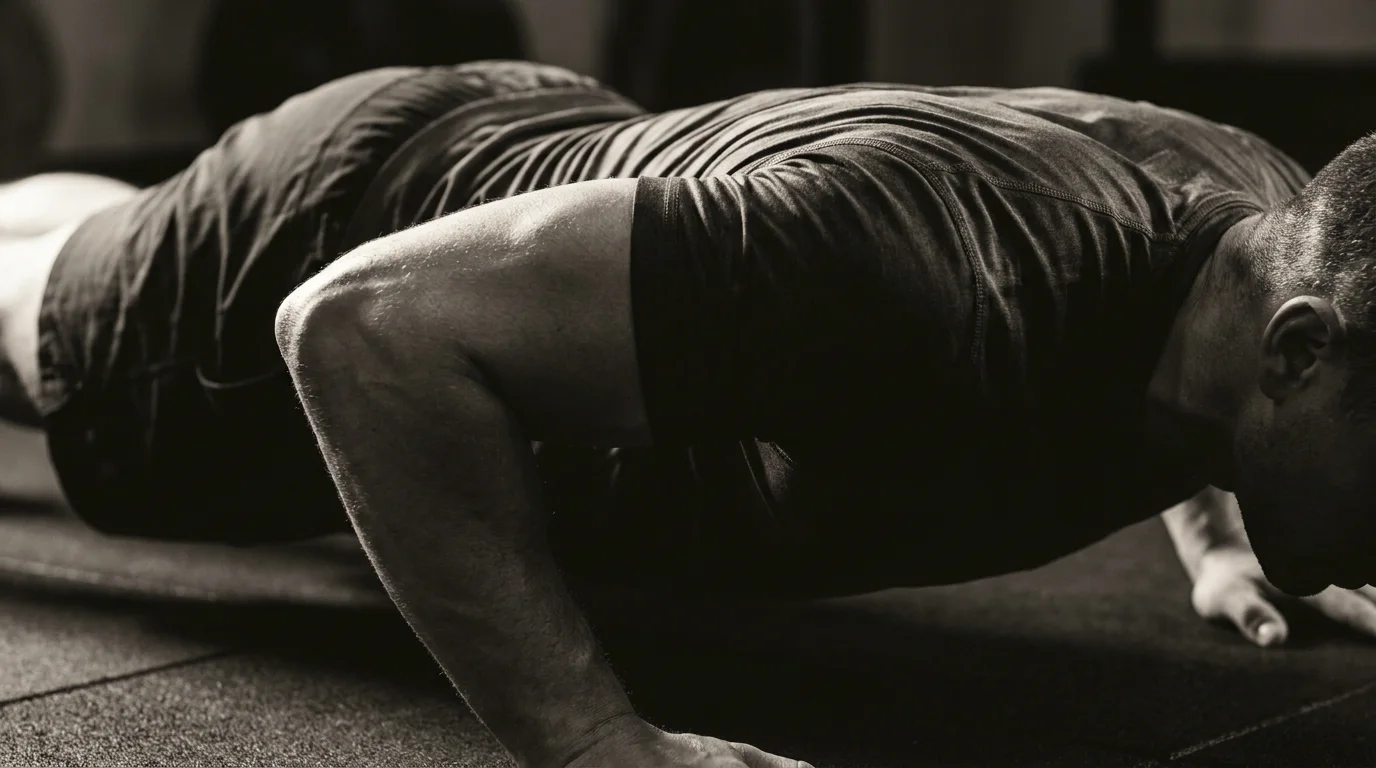
Age- and sex-specific push-up norms: what counts as ‘average’ across the decades
What 'average' means in normative samples
In norm data, the 50th percentile is the typical median for a group, while 5th to 95th percentile bands show how much performance varies. Norms appear for decadal age groups and are reported using these five points.
Decade-by-decade percentile ranges (5th to 95th)
Push-up norms by age cover decades (10–19, 20–29, 30–39, etc.). Within each group, the 5th, 25th, 50th, 75th, and 95th percentiles map how many reps sit below or above peer performance. This helps answer: how many pushups can the average person do relative to age and sex, and how wide the spread can be.
Youth norms vs. adult norms: non-comparability and appropriate uses
Youth norms (FitnessGram push-ups) and adult norms (CSEP-PATH push-ups) use different protocols and target populations. Directly comparing a 15-year-old to a 28-year-old isn’t appropriate; use each set to track growth or fitness within the intended group.
Protocol effects: standard vs knee-modified push-ups and sex differences
Protocol differences matter. Knee-modified push-ups reduce load and shift percentile placement; sex differences can appear in certain decades, informing interpretation without overgeneralizing.
Protocols and charts: FitnessGram vs CSEP-PATH, and how to read the data
Understanding the two protocols
- FitnessGram push-ups use a cadence-based, full-range protocol; youth data often appear with knee-modified variants, but the core chart reflects standard form.
- CSEP-PATH push-ups measure the maximum repetitions to failure with strict form in adults, yielding counts that differ from FitnessGram due to rules.
How protocol shapes counts and comparisons
- Cadence, range of motion, and modification allowances shift counts, so direct cross-protocol comparisons are not advised.
Interpreting percentile charts for push-ups
- Read 5th, 25th, 50th, 75th, 95th percentiles by age and sex; within-protocol norms guide interpretation, not cross-protocol.
Data sources: Santos 2014 and Payne 2000 and updates
- Santos 2014 covers youth via FitnessGram; Payne 2000 covers adults via CSEP-PATH; newer studies add data but comparability remains limited.
Common pitfalls when comparing across protocols
- Never mix youth FitnessGram data with adult CSEP-PATH data; be cautious with knee-modified labels.
Benchmarks by age and sex: decadal examples and practical guidance
Examples by decade (5th–95th percentiles)
- 20–29, men: 12–60 (median ~30)
- 20–29, women: 6–30 (median ~15)
- 30–39, men: 12–50; women: 6–28
- 40–49, men: 10–44; women: 5–26
- 50–59, men: 8–34; women: 5–22
- 60+, men: 6–28; women: 4–18
Spotlight: a 20-year-old—men vs women
How many pushups for a 20 year old? Medians run roughly 30 for men and 15 for women on standard tests; remember knee-modified push-ups and sex-specific protocol exist.
Testing, tracking, and goal-setting
Test with a consistent protocol, warm up, and record reps. Use percentile norms chart by age to benchmark, then set clear 6–12 week goals and track progress.
Caveats and data updates: where to find current norms
FitnessGram vs CSEP-PATH updates matter. Read how to read push-up norms chart, note protocol differences, and cite the latest norms for accurate goals.
Frequently asked questions
What is the average number of push-ups for my age and gender?
In these norms, 'average' means the 50th percentile. Values vary by decade and sex; for example, in the 20–29 group the median is about 30 reps for men and 15 for women on standard tests.
Are knee push-ups counted in these norms?
Knee-modified push-ups appear in youth norms and shift percentile placement; adult norms use standard, full push-ups, so don’t mix knee-modified results with the standard benchmarks.
Where do these push-up norms come from (data sources)?
Norms come from established studies: Santos 2014 for youth FitnessGram and Payne 2000 for adults CSEP-PATH, with updates adding newer data.
How can I improve my push-up count to reach a higher percentile?
Train with protocol-aligned testing and progressive volume, focusing on form and cadence; gradually increase reps and retest on the same protocol to move toward higher percentiles.
About the authors

Goran Huskić
Co-founder · Professional basketball player
Goran Huskić is a Serbian professional basketball player — a 6'11" center currently playing for Monbus Obradoiro in Spain's Primera FEB. He won the 2019–20 Basketball Champions League with San Pablo Burgos and has competed professionally across Spain, Germany, Lithuania, Serbia and the United States. He co-founded PUSHapp to bring pro-level training discipline to everyday workouts.

Nikola Janković
Co-founder · Former professional basketball player
Nikola Janković is a former professional basketball player — a 6'9" forward and the 2016–17 ABA League MVP — who played for Partizan, Union Olimpija and Mega, among others. Today he runs a pilates studio and gym focused on strength, mobility and overall wellbeing. He co-founded PUSHapp to make consistent, measurable training simple for everyone.