
Muscles & Benefits
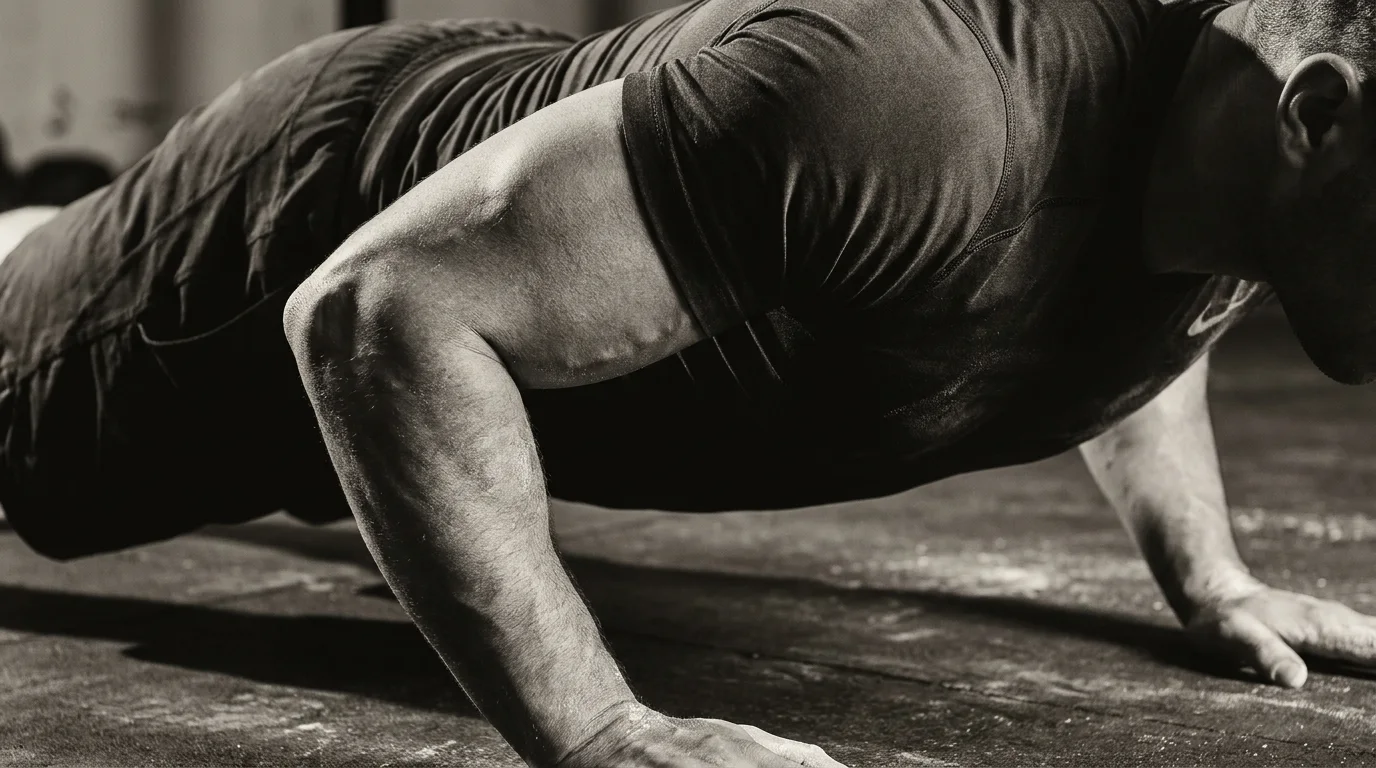
Home Chest Workout No Equipment: Bodyweight Push-Ups
Discover a comprehensive home chest workout no equipment using bodyweight push-up variations, progressions, and tempo cues to train chest effectively.
Foundations of No-Equipment Chest Training: Anatomy, Tempo, and Progression
Chest anatomy and targeted regions (upper, middle, lower)
The chest is the pectoralis major with distinct regions: upper, middle, and lower fibers. Push-ups bias these areas differently based on hand position and body angle, so you can target each region without weights. For example, a slight incline shifts emphasis to the lower chest, while elevating the feet (decline push-ups) nudges the upper fibers.
Structuring reps, sets, tempo, and rest for no-equipment work
A practical framework: 3–4 sets of 6–12 reps, with 60–90 seconds rest. Use a controlled tempo, for instance 2 seconds down, 0-second hold, 1–2 seconds up. Keep the movement smooth and deliberate to maximize time under tension and form.
RPE/RIR concepts and progression cues
Aim for an RPE of 7–8 (roughly 1–2 reps in reserve). Progress by adding reps, slowing tempo, or increasing difficulty (e.g., elevated feet, archer push-ups, or a loaded backpack). These are all part of a steady push-up progression for chest.
Push-ups vs bench press: activation and transfer
Bench pressing often allows heavier loads and greater chest isolation. Push-ups recruit core and shoulder stabilizers, enhancing control. with gradual progression and tempo work, strength and hypertrophy carry over, but plan to dose volume to match bodyweight limits.
Push-Up Variations to Target the Full Chest: Incline, Decline, and Unilateral Progressions
Incline Push-Ups: Emphasizing the Upper Chest
- Place your hands on a sturdy elevated surface (bench, step). This bias helps upper chest development at home. Keep elbows ~45 degrees, ribs braced, and press through the hands as you rise. Slow lowers (3-count) with a brief top squeeze.
Decline Push-Ups: Accessing the Lower Chest
- Feet on a chair, hands on the floor. Maintain a straight line from head to heels. Lower until your chest is a touch above the floor, then press up; the incline angle shifts emphasis toward the lower chest.
Flat, Wide, and Diamond Variations for Overall Mass
- Flat: standard chest work.
- Wide: hands wider than shoulders to broaden the chest shelf.
- Diamond: hands close in a diamond to stress the inner chest and triceps.
Unilateral and Offset Variations for Overload
- One-arm progressions or one-hand-forward offset stances increase demand on each side without weights.
Optional Overload: When and How to Use Resistance Bands
- Loop a light band under the back or anchor it to a door to add resistance, matching tempo and control. This suits a no equipment chest workout and enhances progress.
Structured Multi-Movement Chest Day and a 4-Week Progression Plan
This practical plan blends push-up progressions into a cohesive weekly routine you can run at home with no weights. It’s a scalable home chest workout bodyweight routine that stays hard enough to drive progress, with optional resistance bands for overload.
The 3-Round Chest Day Template
- Do 3 rounds total. In each round, perform: standard push-ups (8–12), incline push-ups (8–12), decline push-ups (6–10).
- Rest 60–90 seconds between rounds.
- Tempo: 2 seconds down, hold 0, 2 seconds up, 0 hold (2-0-2-0).
- RPE: aim 7–8 in rounds 1–2, about 8–9 in round 3.
- Optional: add a resistance band around your torso for extra overload if available.
4-Week Progression Snapshot
- Week 1: keep the template, 8–12/8–12/6–10; rest 60–90s; tempo 2-0-2-0; RPE 7–8.
- Week 2: +2 reps per exercise or add a fourth round.
- Week 3: keep reps, slow eccentrics (3-0-3-0) or add one more round.
- Week 4: push toward higher effort with 60–75s rests; RPE near 9.
Tempo, RPE, and Rest Guidelines for Bodyweight Training
- Baseline tempo: 2-0-2-0.
- Rest: typically 60–90 seconds; shorten to 60 seconds as you advance.
- RPE targets: 7–8 for most sets, peak efforts around 9.
Track, adjust, and scale for space and equipment limits
- Record weekly reps and rounds.
- If space is tight, stick to 2 rounds; if you have a bench or stairs, adjust incline/decline to vary difficulty.
- Use resistance bands to overload when needed, and scale back if form suffers.
Frequently asked questions
What is the best no-equipment chest workout for at home?
Use a three-layer push-up progression: incline/knee push-ups to learn the pattern, standard push-ups to load the chest, then feet-elevated (decline) push-ups for extra depth; use tempo cues (lower 2–3s, pause 0–1s, push 1–2s) and perform 3–4 sets of 6–12 reps with 60–90 seconds rest, progressing to harder variations as you master form.
Can push-ups alone build a big chest without weights?
Yes—through smart progression, controlled tempo, and sufficient volume, push-ups can build strength and hypertrophy; they can yield meaningful chest gains, though bench presses often allow heavier loads and greater isolation.
Which push-up variation targets the upper chest the most?
Incline push-ups, where your hands are on a raised surface, bias the upper chest more than flat push-ups.
How many sets and reps should I do for a no-equipment chest workout?
Aim for 3–4 sets of 6–12 reps per movement with 60–90 seconds rest between sets, using a controlled tempo (e.g., 2 seconds down, 0 hold, 1–2 seconds up).
About the authors
Goran Huskić
Co-founder · Professional basketball player
Goran Huskić is a Serbian professional basketball player — a 6'11" center currently playing for Monbus Obradoiro in Spain's Primera FEB. He won the 2019–20 Basketball Champions League with San Pablo Burgos and has competed professionally across Spain, Germany, Lithuania, Serbia and the United States. He co-founded PUSHapp to bring pro-level training discipline to everyday workouts.
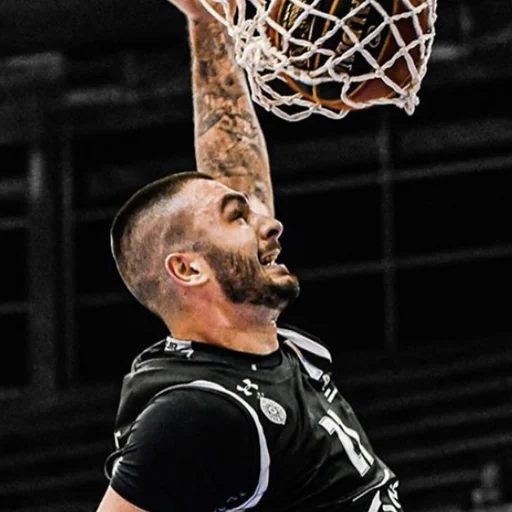
Nikola Janković
Co-founder · Former professional basketball player
Nikola Janković is a former professional basketball player — a 6'9" forward and the 2016–17 ABA League MVP — who played for Partizan, Union Olimpija and Mega, among others. Today he runs a pilates studio and gym focused on strength, mobility and overall wellbeing. He co-founded PUSHapp to make consistent, measurable training simple for everyone.