
Muscles & Benefits
Chest and Tricep Home Workout: At-Home Plan
Discover a chest and tricep home workout that scales from beginner to advanced, with progression tips, routines, and at-home exercise options.
Foundations: anatomy, sequencing, and warm-up for chest and triceps at home
Anatomy overview: chest and triceps muscles and movements
- Anatomy mapping includes pectoralis major with clavicular and sternocostal heads, and the triceps brachii with long, lateral, and medial heads.
- The chest drives the press while the triceps finish elbow extension; the anterior deltoid and serratus anterior stabilize.
- In a bodyweight chest workout these relationships guide angles and progressions to spark hypertrophy.
Muscle synergy and sequencing decisions (chest-first vs combined)
- Chest-first sequencing fatigues the chest early by starting with a demanding push up variation.
- Combined sequencing preserves triceps effort for later in the set.
- For hypertrophy chest triceps at home, structure blocks with a chest block then a triceps block and short rests.
Warm-up, mobility, and injury prevention tailored to home settings
- 5 to 7 minutes of dynamic warm up: arm circles, arm swings, thoracic twists.
- Activate scapular muscles with wall slides or scapular push ups.
- Include light incline push ups and band pull aparts to prep elbows and shoulders.
- Keep ribs aligned, spine neutral, and tempo controlled.
Equipment overview for a minimal home gym
- A sturdy chair or bench, resistance bands, and a towel or sliders cover the basics.
- Optional dumbbells or a backpack with books adds load.
- A doorway anchor helps set up bands safely.
Progression, RPE autoregulation, and periodization for a chest and tricep home workout
rpe-based autoregulation basics
- RPE progression means you adjust load and reps based on how you feel on the day. For most main sets aim for an RPE of 7 to 8 on a chest and triceps program.
- If you hit RPE 9 to 10, back off by 1 rep or reduce load so you stay in a sustainable range.
- If you consistently fall short of reps, keep the same work and add reps next session or the next week, not more than 1 to 2 reps per set at a time.
constructing 4-, 8-, and 12-week progression templates
- beginner 4 weeks: 2 to 3 workouts per week, 2 sets per exercise, target RPE 7. Week 3 adds 1 extra set. Week 4 maintain or deload.
- intermediate 8 weeks: establish base in weeks 1 to 4, then add 1 set every 2 weeks and push toward RPE 8 to 9 in weeks 5 to 8.
- advanced 12 weeks: build to 4 to 5 total sets per session, introduce tempo or paused reps in weeks 9 to 12 while keeping form clean.
sequencing strategies with practical examples
- chest-first sequencing: do chest work first, then triceps work in the same session. For example, 3 chest sets, then 2 triceps sets.
- chest-and-triceps sequencing: pair moves in supersets or alternate blocks so both muscles stay under tension. For instance, a chest push variation paired with a triceps push variation, then switch to the next pair.
common pitfalls and safe progression adjustments
- avoid jumping volume too fast. progress 1 to 2 sets over 1 to 2 weeks based on comfort and form.
- prioritize technique over load; stop if form breaks or pain arises.
- ensure at least 48 hours between heavy sessions and adjust if soreness accumulates.
Structured at-home plan: equipment, week-by-week templates, and sample workouts
This section provides ready-to-use templates for a home chest workout with triceps focus that adapt to bands, a backpack, or weights. You will find beginner to advanced progression and a clear push-day at home rhythm.
Equipment options and how they affect progression
- Bodyweight only favors tempo and precision. Use paused reps to increase difficulty.
- Bands add constant tension. Progress by heavier bands or more reps.
- Backpack weights let you load modest resistance quickly. Use it for push-ups and incline work.
- Weights enable heavier loads for floor presses and triceps work. Increase load gradually while preserving form.
4-, 8-, and 12-week plan templates for different experience levels
- 4 weeks beginner: 3 days per week, 3 sets of 8 to 12. Add 2 reps per week.
- 8 weeks intermediate: 3 to 4 days per week, 3 to 4 sets, finish with a heavier final set.
- 12 weeks advanced: 4 days per week, include supersets and higher intensity sets.
Weekly schedules: push-day structure and sequencing
- Push day at home: warm up 6 to 8 minutes, 3 to 4 exercises, 2 to 3 sets each, 60 to 90 seconds rest.
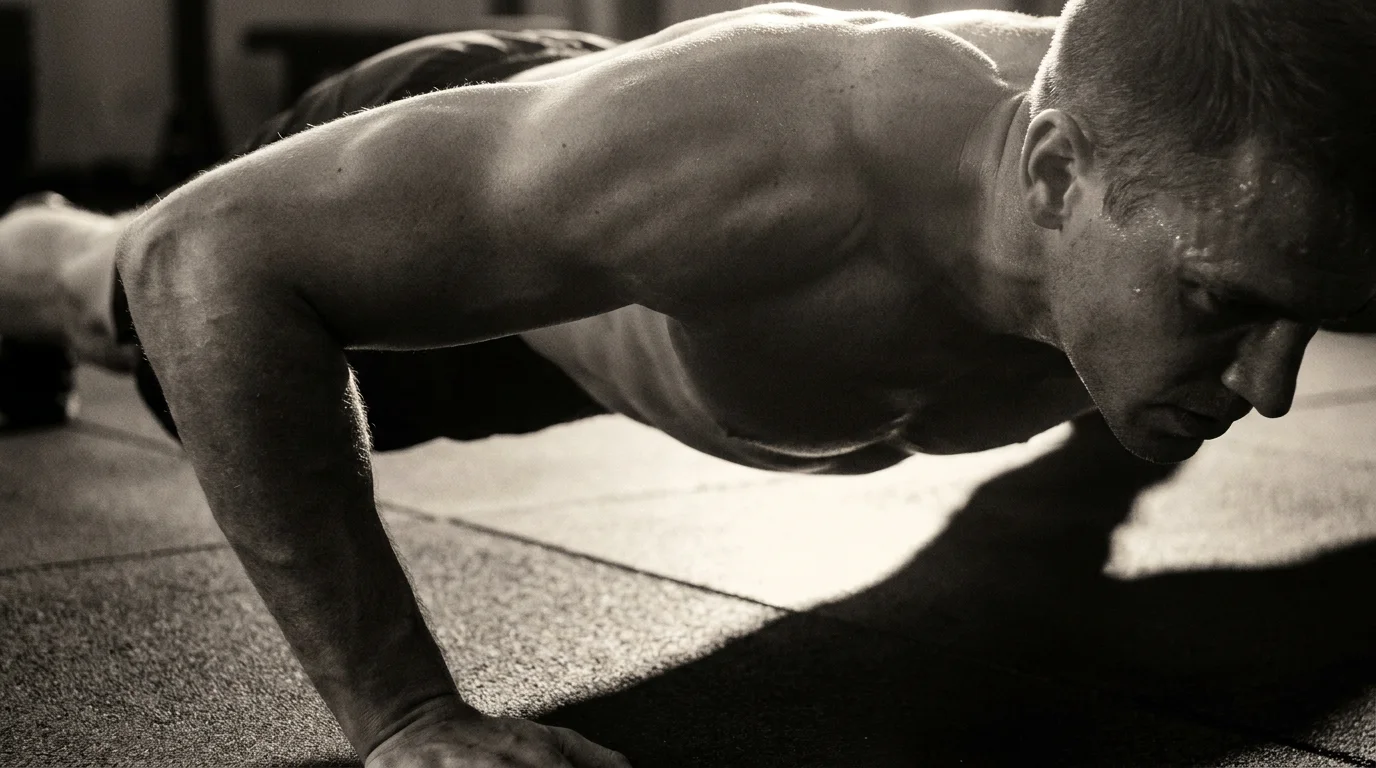
- Example sequence: push-ups, incline press or backpack press, triceps work, short finisher.
Warm-up, mobility, and injury-prevention protocol for chest and triceps at home
- Dynamic shoulder and chest openers, band pull-aparts, scapular push-ups.
- Gentle chest and shoulder stretches; finish with a brief cooldown.
Frequently asked questions
What is the best chest and triceps workout for building size?
A scalable plan that starts with basic push up variations and progresses to harder ones, paired with triceps work like chair dips or close grip push ups. Use RPE autoregulation and structure chest blocks followed by triceps blocks with short rests.
Should you train chest and triceps on the same day or separate days?
The program supports training them on the same day with chest first or in combined blocks. Structure your session as a chest block then a triceps block and keep rest periods short.
What are beginner-friendly chest and triceps exercises you can do at home?
Begin with floor push ups or incline push ups for the chest, and chair dips or close grip push ups for the triceps. All can be done with a mat and a chair, with optional resistance bands for added load.
How many sets and reps are optimal for chest and triceps hypertrophy?
Begin with two sets per exercise and six to eight controlled reps, targeting an RPE around 7. Over time add one set every two weeks and push toward higher RPE, aiming for four to five total sets per session in a longer plan and include tempo or paused reps in advanced weeks.
About the authors
Goran Huskić
Co-founder · Professional basketball player
Goran Huskić is a Serbian professional basketball player — a 6'11" center currently playing for Monbus Obradoiro in Spain's Primera FEB. He won the 2019–20 Basketball Champions League with San Pablo Burgos and has competed professionally across Spain, Germany, Lithuania, Serbia and the United States. He co-founded PUSHapp to bring pro-level training discipline to everyday workouts.
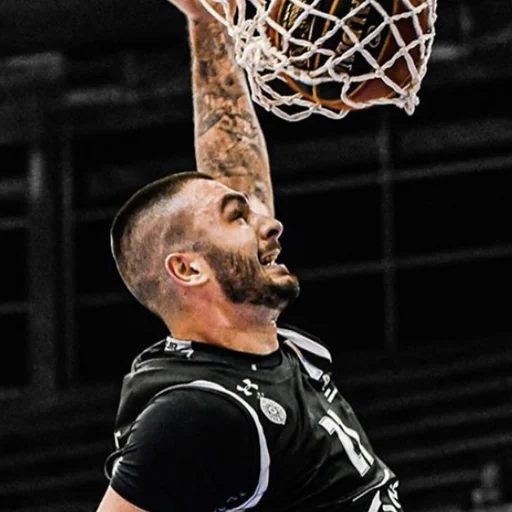
Nikola Janković
Co-founder · Former professional basketball player
Nikola Janković is a former professional basketball player — a 6'9" forward and the 2016–17 ABA League MVP — who played for Partizan, Union Olimpija and Mega, among others. Today he runs a pilates studio and gym focused on strength, mobility and overall wellbeing. He co-founded PUSHapp to make consistent, measurable training simple for everyone.