
Muscles & Benefits
Hindu Pushups Muscles Worked: Technique & Benefits
Explore Hindu pushups muscles worked: muscles targeted, proper technique, safety tips, and variations like dive bomber and rock-and-roll push-ups.


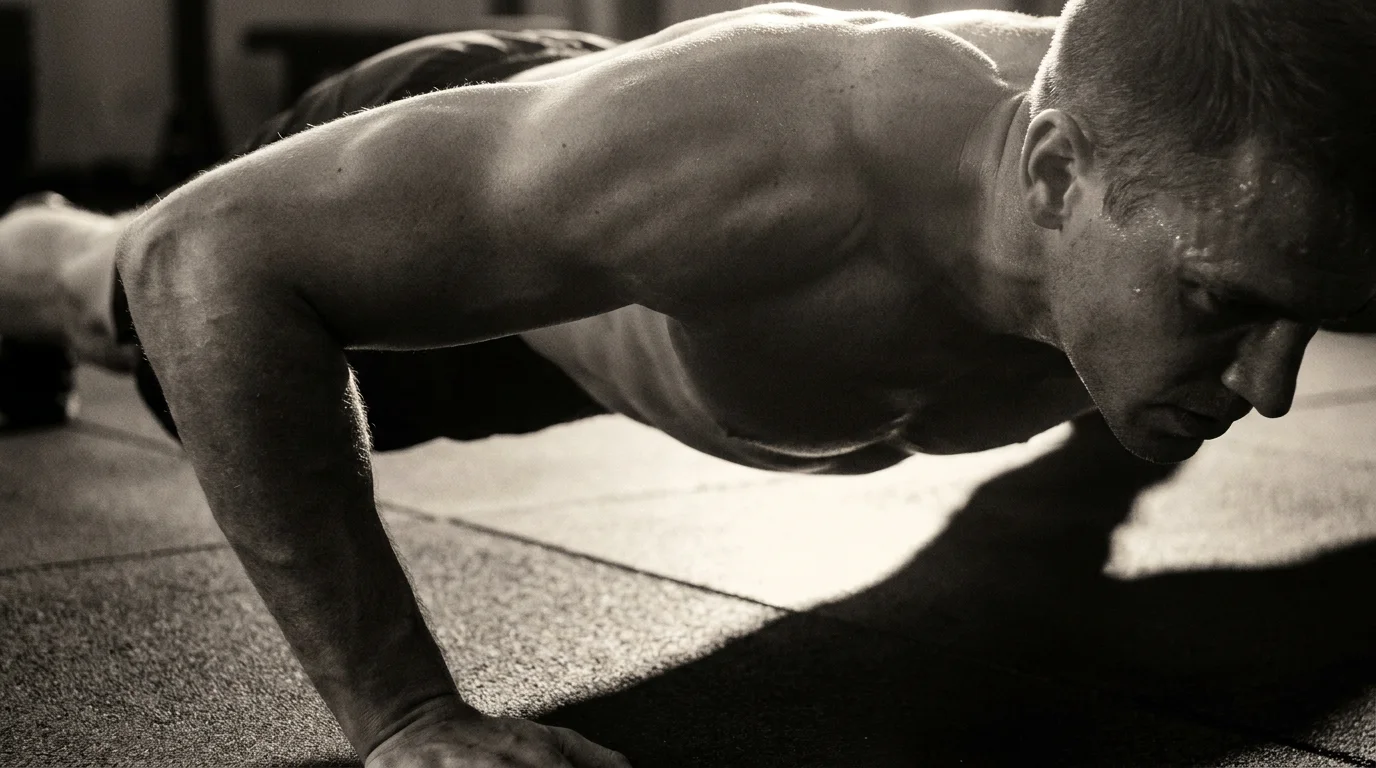
Hindu Pushups: Technique, Biomechanics, and Primary Muscles
Movement sequence and phase-by-phase muscle activation
Start with hips high and hands under shoulders, feet about hip-width apart; spine neutral, core engaged. This movement reveals which muscles do Hindu push-ups work: serratus anterior, pectorals, deltoids, abdominals, and shoulder-girdle stabilizers. Initiate a shallow arc by lowering the chest toward the floor as the hips dip; scapulae protract and the serratus lights up. The chest passes between the hands and the body rounds into a cobra-like position, emphasizing the pecs, deltoids, and abdominals to control the spine. From there, reverse the arc, pressing forward and up into a gentle backbend, with shoulders retracting as you push through the torso. Finish by returning to the starting arc. Use cat-stretch cues to mobilize the spine between reps.
Biomechanical comparison: Hindu vs dive bomber vs standard push-up
Hindu pushups emphasize scapular mobility and serratus engagement, loading the shoulder girdle and abdominals differently than a standard push-up. They’re less about pure triceps drive and more about coordinated spinal movement than a dive bomber, rock-and-roll push-ups, or judo-style variants.
Secondary movers and core engagement
Rhomboids, lats, traps stabilize the scapula; obliques and transverse abdominis brace the torso; glutes and quads help maintain posture.
Origins, History, and Related Movements
Historical roots: Indian wrestling and pehlwani
Pehlwani, the traditional Indian wrestling style practiced in akharas, developed long ago and used bodyweight drills that echo Hindu push-ups, a point noted in historical overviews of pehlwani.
Yoga
Yoga traditions link dynamic arm work to Surya Namaskar and the cat stretch, highlighting mobility and breath in the same lineage.
Sun Salutation tie-ins
Surya Namaskar emphasizes core, shoulder, and hip action, offering a natural bridge to the Hindu push-up pattern in warmups or circuits.
Cross-cultural links and related movements
In modern training, similar moves appear as rock and roll push-ups, judo push-ups, and the daṇḍa push-up; cat stretch rounds out the mobility triad.
Terminology and related movements
Terminology varies by region, with Hindu push-up, daṇḍa push-up, and pehlwani appearing in historical and fitness texts; the Sun Salutation connection Hindu push-ups is a common label.
Training Protocols: Progressions, Regressions, Safety, and Variations
Beginning-to-advanced progressions with tempo and ROM
- Regression: wall Hindu push-ups. Keep the arc small; tempo 3-0-2-0; focus on Hindu push-ups technique and muscles worked.
- Floor regression: tall-stance or kneeling Hindu push-ups to build rhythm; ROM increases as scapular mechanics improve.
- Full Hindu push-ups: on the floor; lead with the chest; arc from downward-dog to cobra; tempo 3-0-2-0.
- Advanced: rock-and-roll push-up and judo push-up; cue-based practice tips: maintain the arc, control the roll.
Common mistakes and corrective cues
- Hips sag or ribs flare: brace core, pelvis neutral.
- Elbows flare, wrists collapse: keep elbows tucked, wrists under shoulders.
- Rushing tempo: slow down, breathe out on effort.
Safety guidelines and mechanics comparisons
- Hindu push-ups safety and common mistakes: warm up shoulders; progressive ROM; use a mat; avoid pain.
- Dive bomber push-ups differences: the arc and hip involvement differ from standard push-ups; rock-and-roll and judo push-ups tailor load and ROM.
Frequently asked questions
What muscles do Hindu push-ups work?
They target the chest, front shoulders, and triceps, with meaningful help from the core and back to maintain the curved spine; the serratus anterior and scapular stabilizers light up, with the hips and thoracic mobility also playing a role.
How are Hindu push-ups performed (technique/steps)?
Start with hips high, hands under shoulders, feet hip-width apart, spine neutral and core engaged. Initiate a shallow arc by lowering the chest toward the floor as the hips dip and the scapulae protract; the chest passes between the hands and the body rounds into a cobra-like position, then reverse the arc, pressing forward into a gentle backbend and returning to the starting position.
What is the difference between Hindu push-ups and standard push-ups in terms of muscles worked?
Hindu push-ups emphasize scapular mobility and serratus engagement, loading the shoulder girdle and abdominals differently from standard push-ups. They also involve a flowing arc and spine movement rather than the more linear, pure triceps drive of a traditional push-up.
What is the origin or history of Hindu push-ups?
They originate from traditional Indian bodyweight conditioning and pehlwani wrestling, blending mobility work with strength. Yoga traditions and Surya Namaskar tie them to a broader mobility-strength lineage.
About the authors

Goran Huskić
Co-founder · Professional basketball player
Goran Huskić is a Serbian professional basketball player — a 6'11" center currently playing for Monbus Obradoiro in Spain's Primera FEB. He won the 2019–20 Basketball Champions League with San Pablo Burgos and has competed professionally across Spain, Germany, Lithuania, Serbia and the United States. He co-founded PUSHapp to bring pro-level training discipline to everyday workouts.
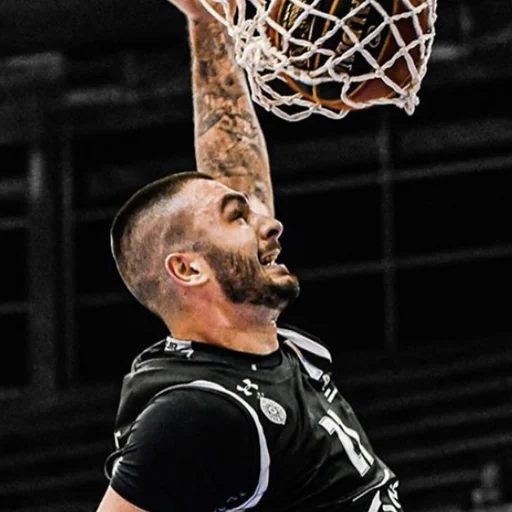
Nikola Janković
Co-founder · Former professional basketball player
Nikola Janković is a former professional basketball player — a 6'9" forward and the 2016–17 ABA League MVP — who played for Partizan, Union Olimpija and Mega, among others. Today he runs a pilates studio and gym focused on strength, mobility and overall wellbeing. He co-founded PUSHapp to make consistent, measurable training simple for everyone.